publications
My publications arranged in reversed chronological order.
2023
-
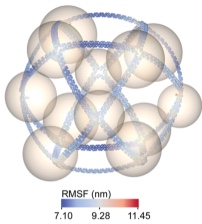 High-speed 3D DNA-PAINT and unsupervised clustering for unlocking 3D DNA origami cryptographyG. Bimananda M. Wisna, Daria Sukhareva, Jonathan Zhao, and 6 more authorsbioRxiv, 2023
DNA origami cryptography, which employs nanoscale steganography to conceal information within folded DNA origami nanostructures, shows promise as a secure molecular cryptography technique due to the large 700-bit key size generated through scaffold routing and sliding and the interlacing of staple strands.1 However, achieving the promised security, high information density, fast pattern detection, and accurate information readout requires even more secure cryptography and fast readout. Here, we advance the DNA origami cryptography protocol by demonstrating its ability to encrypt specific information in both 2D and 3D DNA origami structures, thus increasing the number of possible scaffold routings and improving the encryption key size. To this end, we used all-DNA-based steganography, enabled by high-speed 2D and 3D DNA-PAINT super-resolution imaging, which does not require protein binding to reveal the pattern, allowing for higher information density. We combined 2D and 3D DNA-PAINT data with unsupervised clustering, achieving up to 89% accuracy and high ratios of correct-to-wrong readout despite significant flexibility in the 3D DNA origami structure shown by oxDNA simulation. Furthermore, we propose design criteria that ensure complete information retrieval for the DNA origami cryptography protocol. We anticipate that this technique will be highly secure and versatile, making it an ideal solution for secure data transmission and storage via DNA.Competing Interest StatementThe authors have declared no competing interest.
@article{Wisna2023.08.29.555281,
  author = {Wisna, G. Bimananda M. and Sukhareva, Daria and Zhao, Jonathan and Satyabola, Deeksha and Matthies, Michael and Roy, Subhajit and {\v S}ulc, Petr and Yan, Hao and Hariadia, Rizal F.},
  title = {High-speed 3D DNA-PAINT and unsupervised clustering for unlocking 3D DNA origami cryptography},
  elocation-id = {2023.08.29.555281},
  year = {2023},
  doi = {10.1101/2023.08.29.555281},
  publisher = {Cold Spring Harbor Laboratory},
  url = {https://www.biorxiv.org/content/early/2023/08/31/2023.08.29.555281},
  eprint = {https://www.biorxiv.org/content/early/2023/08/31/2023.08.29.555281.full.pdf},
  journal = {bioRxiv},
}

2022
-
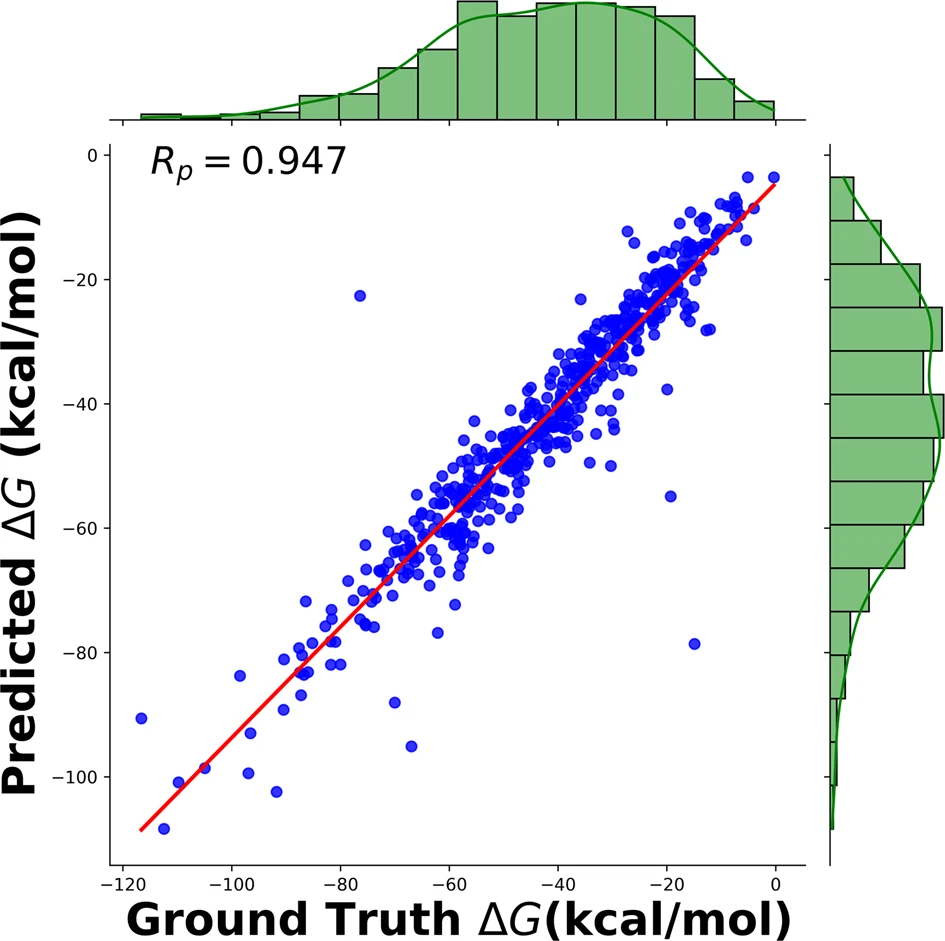 Plas-5K: Dataset of protein-ligand affinities from molecular dynamics for Machine Learning ApplicationsDivya B. Korlepara, C. S. Vasavi, Shruti Jeurkar, and 8 more authorsScientific Data, 2022
Computational methods and recently modern machine learning methods have played a key role in structure-based drug design. Though several benchmarking datasets are available for machine learning applications in virtual screening, accurate prediction of binding affinity for a protein-ligand complex remains a major challenge. New datasets that allow for the development of models for predicting binding affinities better than the state-of-the-art scoring functions are important. For the first time, we have developed a dataset, PLAS-5k comprised of 5000 protein-ligand complexes chosen from PDB database. The dataset consists of binding affinities along with energy components like electrostatic, van der Waals, polar and non-polar solvation energy calculated from molecular dynamics simulations using MMPBSA (Molecular Mechanics Poisson-Boltzmann Surface Area) method. The calculated binding affinities outperformed docking scores and showed a good correlation with the available experimental values. The availability of energy components may enable optimization of desired components during machine learning-based drug design. Further, OnionNet model has been retrained on PLAS-5k dataset and is provided as a baseline for the prediction of binding affinities.
@article{Korlepara_Vasavi_Jeurkar_Pal_Roy_Mehta_Sharma_Kumar_Muvva_Sridharan_et_al._2022,
  title = {Plas-5K: Dataset of protein-ligand affinities from molecular dynamics for Machine Learning Applications},
  volume = {9},
  doi = {10.1038/s41597-022-01631-9},
  number = {1},
  journal = {Scientific Data},
  author = {Korlepara, Divya B. and Vasavi, C. S. and Jeurkar, Shruti and Pal, Pradeep Kumar and Roy, Subhajit and Mehta, Sarvesh and Sharma, Shubham and Kumar, Vishal and Muvva, Charuvaka and Sridharan, Bhuvanesh and et al.},
  year = {2022},
}

2020
-
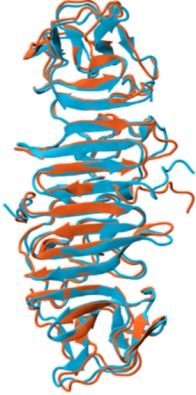 Disulfide Reduction Allosterically Destabilizes the β-Ladder Subdomain Assembly within the NS1 Dimer of ZIKVPriti Roy, Subhajit Roy, and Neelanjana SenguptaBiophysical Journal, 2020
The Zika virus (ZIKV) was responsible for a recent debilitating epidemic that till date has no cure. A potential way to reduce ZIKV virulence is to limit the action of the nonstructural proteins involved in its viral replication. One such protein, NS1, encoded as a monomer by the viral genome, plays a major role via symmetric oligomerization. We examine the homodimeric structure of the dominant β-ladder segment of NS1 with extensive all atom molecular dynamics. We find it stably bounded by two spatially separated interaction clusters (C1 and C2) with significant differences in the nature of their interactions. Four pairs of distal, intramonomeric disulfide bonds are found to be coupled to the stability, local structure, and wettability of the interfacial region. Symmetric reduction of the intramonomeric disulfides triggers marked dynamical heterogeneity, interfacial wettability, and asymmetric salt-bridging propensity. Harnessing the model-free Lipari-Szabo based formalism for estimation of conformational entropy (Sconf), we find clear signatures of heterogeneity in the monomeric conformational entropies. The observed asymmetry, very small in the unperturbed state, expands significantly in the reduced states. This allosteric effect is most noticeable in the electrostatically bound C2 cluster that underlies the greatest stability in the unperturbed state. Allosteric induction of conformational and thermodynamic asymmetry is expected to affect the pathways leading to symmetric higher-ordered oligomerization, and thereby affect crucial replication pathways.
@article{ROY20201525,
  title = {Disulfide Reduction Allosterically Destabilizes the β-Ladder Subdomain Assembly within the NS1 Dimer of ZIKV},
  author = {Roy, Priti and Roy, Subhajit and Sengupta, Neelanjana},
  journal = {Biophysical Journal},
  volume = {119},
  number = {8},
  pages = {1525-1537},
  year = {2020},
  issn = {0006-3495},
  doi = {https://doi.org/10.1016/j.bpj.2020.08.036},
  url = {https://www.sciencedirect.com/science/article/pii/S0006349520306871},
}
